Interview
Winnie Li
1 Congratulations on winning the French Design Awards! Can you introduce yourself and share about what inspired you to pursue design as a career?
From a very young age, I have always longed for a home filled with warmth and harmony. I wanted my family to feel comfortable being together and spending time at home. Even before I was ten, I genuinely enjoyed taking care of our household chores, moving furniture, rearranging things, and finding ways to make the space feel better. It was not until high school, when I was introduced to interior design, that I realised these childhood interests were closely connected to spatial design. I found that I could easily understand spatial concepts and, more importantly, that I truly enjoyed the process. That realisation gave me the confidence to pursue design professionally after graduation.
2 What does being recognised in the French Design Awards mean to you?
To me, it represents a very comprehensive form of recognition. Each of the three projects we entered have their own distinct character. They range from small-scale to large-scale residences and include different design approaches, with one of them leaning more toward a contemporary aesthetic. What makes this recognition particularly meaningful to me is that all three projects—despite their different scales, styles, and lifestyles—were recognised by the same international design award. For me, this demonstrates that EWA Interior Design is not limited to a single design language. We can respond to different clients, different needs, and different interpretations of what “home” means, creating a dream home that is truly tailored to everyone. That is what makes this recognition especially meaningful and joyful for me.
3 How has this achievement impacted your career, team, or agency, and what opportunities has it brought so far?
Having three projects recognised across three different design directions is a tremendous encouragement for our entire team. In the past, EWA Interior Design was more strongly associated with contemporary minimalism. However, two of the winning projects this time explore American-inspired residential design, covering both large and smaller homes. In a way, this made the recognition even more meaningful to us, because it revealed a broader range of possibilities for the brand. It shows us that EWA has the potential to serve a wider audience and that the brand itself has greater flexibility and room to evolve. Looking ahead, we also hope to extend our design expertise beyond residential projects into workplace environments. People spend nearly one-third of their day at work, so we believe workplaces should also provide comfort, a sense of healing, and a feeling of fulfilment through thoughtful design. That is an area we are very interested in exploring in the next stage of EWA’s development.
4 What role does experimentation play in your creative process? Can you share an example?
Our award-winning project, Glow & Veil, was, in many ways, a new experience for EWA Interior Design. It was a large-scale American-inspired residence, a typology we had less experience with in the past, and it was also our first time working extensively with a client remotely while coordinating the project’s on-site execution. The project was particularly challenging because communication required a great deal of sensitivity. The homeowners were based in Silicon Valley and had very detailed ideas about what they wanted their home to feel like. Despite the physical distance, we invested a significant amount of time in online meetings and discussions, allowing the homeowners to communicate even the smallest details of their needs in each space. Interestingly, the process became a very comfortable and rewarding collaboration. In the past, I assumed that remote communication would create certain limitations or blind spots. This experience proved otherwise. When communication is thoughtfully established, distance does not have to prevent a design concept from being understood or successfully realised. In that sense, the project helped EWA overcome the boundaries of distance and geography.
5 What's the most unusual source of inspiration you've ever drawn from for a project?
Some of the most interesting challenges—and sources of inspiration—come from the things our clients want to preserve. Sometimes it is because of budget considerations; other times, the homeowners simply have an emotional attachment to certain existing elements of space. For us as designers, this requires a great deal of sensitivity: how do we work within the budget, integrate the existing elements with the new design, and still achieve the client’s expectations? I genuinely enjoy this process because it feels almost like performing a kind of magic. How can something old be transformed into something new? How can an element that was once considered undesirable become an unexpected feature? How can we give an existing element a completely new life? That transformation is one of the things I find most fascinating about design.
6 What’s one thing you wish more people understood about the design process?
I believe trust is one of the most important elements of the relationship between a designer and a client. When we are entrusted with designing someone’s home, our responsibility goes far beyond understanding the physical space. We need to understand the needs of every family member and recognise what stage of life the family is currently experiencing. What kind of environment do they hope to create for their future? Are there aspects of their family relationships or everyday lives that they hope to improve, complete, or redefine? When clients are willing to communicate openly and honestly, designers can begin to see the deeper needs behind their words. Sometimes, with enough understanding of their lifestyle and relationships, we can even anticipate needs that have not yet been expressed verbally. That is why I hope more people can understand that interior design is not simply about decoration. At its heart, it is about understanding people through space and helping them create a better way of living—and, ultimately, a better relationship with one another.
7 How do you navigate the balance between meeting client expectations and staying true to your ideas?
We begin by understanding the family’s current stage of life and the genuine needs of everyone, while also taking the available budget into consideration. For example, a family may include elderly parents as well as young children. Someone may have an extremely busy lifestyle and rarely cook, in which case the emphasis might be placed more on relaxation than on an elaborate kitchen. Young children require a safe environment, while older family members may benefit from wider and more accessible circulation paths. For me, the starting point is never simply, “What style do we want to create?” It is first about understanding how people will live and use space. Once those practical needs have been addressed, we can consider how the design language and aesthetics can be integrated without compromising everyday life. When functionality, personal needs, and aesthetics are properly balanced, the result is a home that remains comfortable not only when it is first completed, but throughout the client’s future life in space.
8 What were the challenges you faced while working on your award-winning design, and how did you overcome them?
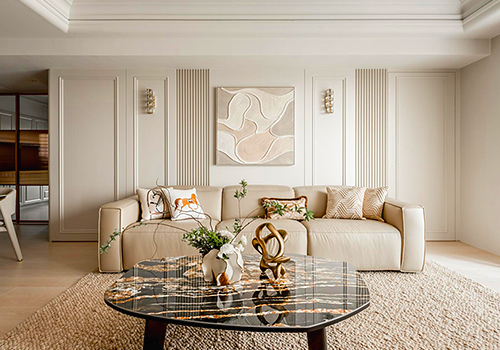
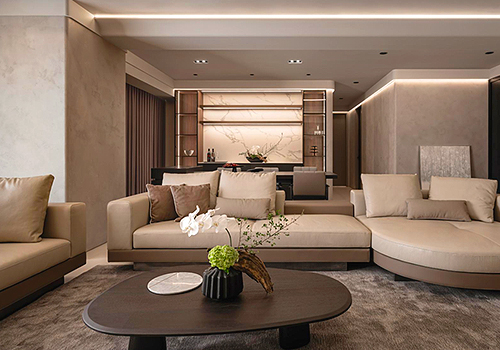
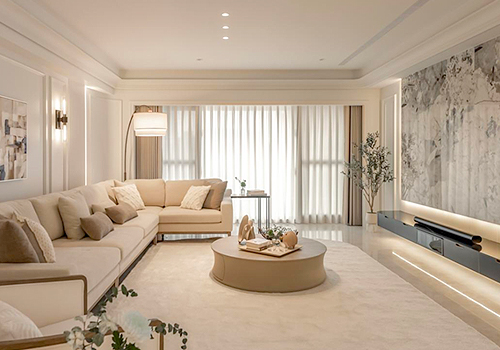
Each of the three award-winning projects presented its own set of challenges. For Glow & Veil, the biggest challenge was the remote communication I mentioned earlier. We needed to understand the homeowners’ highly detailed vision for their home through online meetings and limited physical interaction and then translate that understanding into the built environment. The Art of Refinement presented a different challenge. The project had a very generous budget, and the homeowners dreamed of creating a luxurious living environment. However, the residence itself was not particularly large, so we had to carefully balance a sense of spaciousness and comfort with the desired level of luxury. For me, luxury should never come simply from adding more decorative elements. If the space is designed only to look luxurious, something essential is lost. A Still Vessel Amid the Tides was challenging in another way. The homeowners had a very strong personality and a clear preference for dark, moody interiors. However, they did not want the space to feel overly heavy or oppressive. We spent considerable time communicating and finding the right balance between darkness and comfort. The goal was to create a space that felt relaxing and sophisticated, rather than simply dark for the sake of being dark. Another challenge was their strong preference for clean and controlled lines. They did not want too many visual changes between horizontal, vertical, high, and low elements. However, the existing structural beams created differences in ceiling heights, making this particularly difficult. Through continuous communication with the clients and careful material selection, we eventually used a significant amount of speciality paint to visually soften and reduce the impact of the structural lines. The result was a more cohesive and refined space.
9 How do you recharge your creativity when you hit a creative block?
I really enjoy exercise and have made it a regular part of my life. For me, hiking is probably one of the fastest ways to regain clarity. Mountains offer a rare opportunity to step away from everyday distractions. Once you enter the mountains, you simply must keep moving forward, step by step. That physical journey creates a kind of mental quietness. I can let my thoughts settle, empty my mind, and become more aware of myself again. And when I can become truly quiet, I often find my way back to my original intentions and regain a sense of direction.
10 What personal values or experiences do you infuse into your designs?
I love travelling, and it has given me many different perspectives on how people live. I do not necessarily have a particular type of destination in mind. What I value most is experiencing different cultures, because every culture offers a different way of living and a different set of values. When I return home and work with different families and different clients, these experiences help me maintain a more objective perspective. I have learned that every person is unique, and every family has its own culture and way of living. If a designer becomes too attached to a particular framework or signature style, it can unintentionally limit the client and turn the home into what the designer wants, rather than what the homeowner truly needs. For me, design should never be centred solely on the designer. It should begin with the client—their values, their lifestyle, and their core need.
11 What is an advice that you would you give to aspiring designers aiming for success?
I would encourage young designers to experience as much of life as possible. You do not need a large budget to invest in yourself. One of the best ways to grow is simply to go out, explore, and observe the world around you. Hiking does not require much money. Travelling does not have to be luxurious either. Even travelling in a simple and low-pressure way can offer incredibly valuable experiences. The important thing is to look. Look at fashion and luxury goods. Experience different cultures. Observe everyday life at the grassroots level, but also visit hotels, high-end residences, and other sophisticated environments. Expose yourself to different social environments, industries, and disciplines—from the everyday to the highly refined. You will discover unexpected perspectives and breakthroughs. Every person’s worldview is shaped by their family, upbringing, and life experiences, and within those experiences are often blind spots that we cannot see ourselves. The more we step outside our familiar world, the more we can expand our perspective.
12 If you could collaborate with any designer, past or present, who would it be and why?
I would love the opportunity to collaborate with Kelly Hoppen. When I was young, she was one of the designers I admired most and someone I looked up to. Over the years, she has developed a highly diverse portfolio and collaborated on many projects around the world, including hotels and other hospitality environments. I particularly admire her approach to soft furnishings and the way she creates a distinctive atmosphere through a strong sense of aesthetic cohesion. I also appreciate how she continues to challenge herself across different types of projects and how her work reflects a deep artistic foundation. If I had the opportunity to work with her, I would not simply want to create a project together. I would like to observe how she thinks, how she develops her aesthetic language, and how she translates that vision into different types of spaces.
13 What's one question you wish people would ask you about your work, and what's your answer?
People often ask me, “You are so busy. How do you manage to do so many different things?” I find that question quite interesting. We originally came from the world of design, but around six or seven years ago, I began moving into the field of marketing. Looking back, I really value that turning point because it allowed me to see a completely different way of thinking. Design is about creating something from nothing. It is intuitive and largely driven by emotion. Marketing, on the other hand, is more analytical, relying on data, statistics, and processes. Bringing these two disciplines together has taught me how to find a balance between intuition and rational thinking. I began taking ideas that were once more intuitive and organising them through systems, processes, and structured frameworks. This has not only helped me personally but has also helped our team work together with greater stability, clarity, and efficiency. From a management perspective, I want each team member to have their own stage—to be able to use their strengths and expertise in their respective areas. My role is then to bring everything together, review the overall direction, and make sure the pieces work as a whole. I genuinely enjoy this evolution. For me, design is not only about creating spaces. It is also an ongoing process of understanding myself, understanding my team, and discovering better ways of working together.