Interview
Qian Zuo
1 Congratulations on winning the French Design Awards! Can you introduce yourself and share about what inspired you to pursue design as a career?
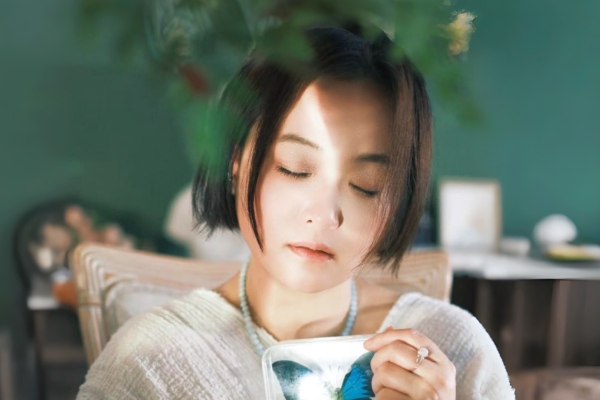
Thank you very much. I am deeply honoured to receive recognition from the French Design Awards. I am Natalie Zuo, a multidisciplinary artist, curator, and 3D environment designer based in Australia. I am also the founder of IWS Australian Women’s Art, where I explore new ways of bringing together traditional visual art, immersive technology, and international cultural exchange. My creative journey began with studying Chinese painting at the Sichuan Fine Arts Institute in China. I later worked as a 3D artist in the game industry before continuing my artistic and curatorial practice in Australia. Living, studying, and working across China and Australia has shaped my understanding of art as a language that can cross cultural, geographical, and emotional boundaries. I was inspired to pursue design because I have always been fascinated by the ability of visual environments to influence how people feel. For me, design is not simply about creating something beautiful; it is about transforming emotions, memories, and spiritual experiences into spaces that others can enter and experience for themselves. My background in mental health has further strengthened my interest in the relationship between art, nature, and emotional wellbeing. This inspired me to create immersive environments that combine watercolour aesthetics, natural landscapes, architecture, music, and interactive digital technology. Through my work, I hope to create gentle and contemplative experiences that encourage audiences to slow down, reconnect with their inner world, and experience a sense of healing. Winning the French Design Awards encourages me to continue exploring the space between art, design, technology, and human emotion, and to develop new forms of immersive artistic experience that connect the visible world with the unseen.
2 What does being recognised in the French Design Awards mean to you?
Being recognised by the French Design Awards is deeply meaningful to me. It affirms that an artistic project centred on nature, emotional healing, and immersive digital experience can be acknowledged within the international design community. As an independent multidisciplinary artist, I have brought together my backgrounds in visual art, 3D environment design, curatorial practice, and mental health to develop a creative language of my own. This recognition gives me greater confidence to continue exploring the relationship between art, technology, nature, and human emotion. It also represents an important milestone in my journey from China to Australia. My experiences across different cultures have shaped the way I understand space, beauty, and emotional connection. Receiving this award encourages me to continue creating work that crosses cultural and disciplinary boundaries. Most importantly, the award gives greater visibility to the values behind my practice. It allows ideas of healing, contemplation, and spiritual sensitivity to reach a wider international audience. To me, it is not only a recognition of what I have created, but also an encouragement to keep building immersive worlds that help people reconnect with nature and their inner selves.
3 How has this achievement impacted your career, team, or agency, and what opportunities has it brought so far?
This achievement has strengthened my professional confidence and increased the international visibility of both my individual practice and IWS Australian Women’s Art. As an independent artist and curator working across visual art, immersive design, and digital technology, receiving recognition from the French Design Awards has given greater credibility to this interdisciplinary direction. The award has also helped me communicate the value of my work more clearly to artists, musicians, cultural organisations, and potential project partners. It has supported new conversations around international collaboration and encouraged me to expand my curatorial practice beyond conventional exhibition formats. It has also contributed to the continued development of Water & Healing, my immersive interactive art project combining watercolour, 3D environments, music, nature, and emotional wellbeing. The recognition has helped introduce the project to a broader audience as it moves towards its release on Steam. The opportunities are still developing, but the award has already brought increased media exposure, professional connections, and greater confidence when approaching cultural institutions and prospective collaborators. Most importantly, it has created a stronger foundation for future international exhibitions, creative partnerships, and projects connecting art, technology, and mental wellbeing.
4 What role does experimentation play in your creative process? Can you share an example?
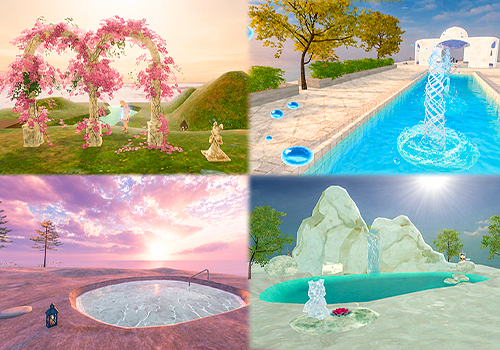
Experimentation is central to my creative process. I often begin with an emotion, a memory, or an intuitive response to nature rather than a fixed technical solution. I then experiment with different media, spatial structures, colours, sounds, and interactive elements until they come together as a coherent experience. A clear example is my immersive digital art project, Water & Healing. The project began as an experiment in bringing traditional watercolour aesthetics into a three-dimensional interactive environment. Instead of presenting paintings only on physical gallery walls, I explored how audiences could enter a virtual landscape, move through it, encounter artworks, listen to healing music, and interact gently with the environment. This process required me to experiment with the relationship between hand-painted visual language and digital technology. I tested ways to preserve the transparency, softness, and emotional sensitivity of watercolour within 3D spaces while combining these qualities with natural landscapes, architecture, sound, light, and multiplayer interaction. Through this experimentation, the project gradually evolved from a virtual exhibition into an immersive artistic world. It demonstrated to me that technology does not need to distance audiences from emotion. When used sensitively, it can deepen emotional connection and create new ways of experiencing art, nature, and wellbeing.
5 What's the most unusual source of inspiration you've ever drawn from for a project?
One of the most unusual sources of inspiration for my work was an unreachable island in the middle of a pink salt lake. While developing Water & Healing, I became fascinated by Lake Tyrrell in Victoria, Australia. Its shallow pink water, salt-covered landscape, and reflections of the sky create an atmosphere that feels almost otherworldly. Some areas within the lake are inaccessible to visitors because of environmental and wildlife protection. This limitation inspired an imaginative question: what if people could experience such a place without physically disturbing its fragile ecosystem? In response, I created a virtual island inspired by the landscape, where visitors can walk through watercolour-like scenery, discover artworks, enter hot springs, listen to healing music, and gently interact with the natural environment. It is not intended to be a literal reproduction of Lake Tyrrell, but an emotional and artistic interpretation of its stillness, fragility, and sense of distance. I found it especially meaningful that digital technology could make an unreachable place emotionally accessible while respecting the real environment. A physical boundary therefore became the starting point for a new creative world—one that exists between reality, memory, imagination, and healing.
6 What’s one thing you wish more people understood about the design process?
I wish more people understood that design is not simply about making something look beautiful. It is a process of listening, questioning, testing, revising, and gradually discovering the most meaningful form for an idea. The final result may appear calm and effortless, but it is often built through many invisible decisions and repeated experiments. Every element—colour, light, sound, scale, movement, and spatial rhythm—can influence how a person feels. Sometimes even the decision to remove something is as important as adding a new feature. In my own practice, I do not begin by asking only, “How should this world look?” I also ask, “How should someone feel while moving through it?” For Water & Healing, this means carefully balancing visual beauty with music, interaction, pacing, accessibility, and emotional wellbeing. Good design, in my view, is not decoration applied at the end. It is a thoughtful process of giving form to an intention and creating a meaningful relationship between people, objects, and their environment.
7 How do you navigate the balance between meeting client expectations and staying true to your ideas?
I believe the balance begins with understanding the deeper intention behind a client’s expectations. Rather than focusing only on a requested visual outcome, I try to understand what they want the audience to feel, remember, or experience. Once this purpose is clear, it becomes easier to identify where my creative perspective can add genuine value. Communication is essential throughout the process. I listen carefully, explain the reasoning behind my design decisions, and use visual references, prototypes, and early tests to make abstract ideas easier to discuss. I remain flexible about methods and details, while protecting the central idea that gives the work its emotional identity. For me, staying true to my ideas does not mean refusing compromise. It means preserving the integrity, sensitivity, and purpose of the design while remaining open to perspectives that may strengthen it. Some of the most successful outcomes emerge when different viewpoints are treated as part of the creative process. Ultimately, I aim to create work that fulfils the client’s practical objectives while still carrying an authentic artistic voice. The best collaboration is not one in which either side completely gives way, but one in which a stronger and more meaningful result is discovered together.
8 What were the challenges you faced while working on your award-winning design, and how did you overcome them?
One of the greatest challenges was translating the softness, transparency, and emotional sensitivity of watercolour into an immersive three-dimensional environment. Many digital spaces rely on realism, heavy detail, or dramatic visual effects, but I wanted this project to feel light, dreamlike, and spiritually calm. Achieving that atmosphere required careful experimentation with colour, lighting, materials, scale, and spatial composition. Another challenge was balancing artistic expression with functionality. The environment needed to be visually poetic while remaining intuitive, accessible, and technically stable for visitors. I repeatedly tested the space, simplified elements that distracted from the experience, and refined the movement and visual rhythm so that audiences could explore naturally without feeling overwhelmed. As an independent creator, I also needed to work across many disciplines, including artistic direction, curatorial planning, 3D environment design, interactive development, sound integration, and project coordination. I overcame this by dividing the project into manageable stages, learning new technical skills when necessary, and seeking feedback from artists, musicians, collaborators, and early visitors. These challenges ultimately strengthened the design. They taught me that limitations can become part of the creative language. By continually testing and refining the relationship between art, space, technology, and emotion, I was able to create an experience that remained true to my original vision while also being practical and engaging for its audience.
9 How do you recharge your creativity when you hit a creative block?
When I experience a creative block, I usually step away from the work rather than forcing an immediate solution. I return to nature, music, painting, or quiet observation, allowing my mind to slow down and reconnect with the original emotion behind the project. Water is especially important to my creative process. Walking beside a lake, observing reflections, listening to rain, or simply watching the movement of water often helps me regain a sense of rhythm and clarity. I also find inspiration in small details—changes in light, the movement of plants, an unexpected colour combination, or a piece of music that creates a strong inner image. Sometimes a creative block is not an absence of ideas, but a sign that the project has become too complicated or has moved away from its central purpose. When this happens, I revisit the initial question: what do I want people to feel? Returning to that emotional intention helps me remove unnecessary elements and discover a clearer direction. I have learned to regard periods of stillness as part of the creative process. Creativity cannot always be forced; sometimes it returns when we create enough quiet space to notice what is already emerging.
10 What personal values or experiences do you infuse into your designs?
The personal values I bring most strongly into my designs are compassion, cultural openness, respect for nature, and a belief in the restorative power of art. I want my work to be visually engaging, but I also hope it can offer audiences a sense of calm, connection, and emotional safety. My experiences of living, studying, and working across China and Australia have deeply shaped my creative perspective. My education in traditional Chinese painting taught me to value emptiness, balance, atmosphere, and the emotional relationship between people and nature. My professional experience in 3D art and digital environments later gave me the tools to translate these ideas into immersive spaces. My studies and experiences in mental health have also made me more attentive to vulnerability, loneliness, resilience, and the different ways people perceive the world. Rather than treating healing as a purely decorative theme, I consider how colour, sound, movement, interaction, and spatial rhythm may influence a visitor’s emotional state. I also value collaboration across cultures. By working with artists and musicians from different countries, I allow diverse memories, traditions, and perspectives to become part of the creative world. Ultimately, my designs reflect my belief that art can connect visible reality with our inner emotional lives, helping people feel less isolated and more connected to themselves, to nature, and to one another.
11 What is an advice that you would you give to aspiring designers aiming for success?
My advice to aspiring designers is to develop a voice that is genuinely their own, while remaining open to learning, collaboration, and change. Technical skills are important, but tools and trends will continue to evolve. What gives a designer’s work lasting value is the clarity of their perspective and the honesty of what they wish to communicate. Do not be discouraged if your path does not follow a conventional direction. Experiences from different cultures, professions, or stages of life can become valuable creative resources. My own journey has brought together traditional painting, 3D design, curatorial practice, mental health, and immersive technology. These fields may initially appear separate, but their combination gradually became the foundation of my artistic identity. I would also encourage young designers to be patient with the process. Meaningful work often requires repeated testing, failure, revision, and periods of uncertainty. Treat limitations as opportunities to think differently, and do not measure success only through immediate recognition. Most importantly, remember the human experience behind every design. Ask not only whether your work looks impressive, but whether it communicates, connects, or contributes something meaningful to people’s lives. Recognition may follow, but creating with purpose is what makes a creative career sustainable and worthwhile.
12 If you could collaborate with any designer, past or present, who would it be and why?
If I could collaborate with any designer, I would choose Japanese game designer and creative director Fumito Ueda, the creator of ICO, Shadow of the Colossus, and The Last Guardian. I deeply admire his ability to communicate emotion through atmosphere, silence, architecture, and the relationship between characters and their surroundings. His worlds do not rely on constant explanation. Instead, light, distance, movement, sound, and empty space allow players to feel loneliness, tenderness, mystery, and connection for themselves. This sensitivity is closely aligned with my own belief that an environment can tell a story and influence emotions without depending heavily on words. I would be fascinated to explore how his restrained, poetic approach to interactive storytelling could connect with my watercolour-inspired visual language and my interest in nature, healing, music, and multidimensional spaces. Together, I imagine creating a contemplative world in which the landscape is not simply a background, but a living emotional presence. Such a collaboration would offer an opportunity to create an experience that feels both intimate and universal—one that invites people to slow down, observe carefully, and form their own emotional relationship with the world around them.
13 What's one question you wish people would ask you about your work, and what's your answer?
The question I wish more people would ask is: “Can a virtual world create a genuine emotional connection with people and help them feel less alone?” My answer is yes, although I do not believe digital art should replace professional mental health care or real human relationships. A thoughtfully designed virtual environment can still provide a meaningful space for reflection, comfort, imagination, and connection. In Water & Healing, I am not simply creating landscapes to be observed. I am designing spaces where visitors can slow down, listen to music, encounter art, interact gently with nature, and share the environment with others. Even a small experience—such as sitting beside virtual water, discovering a hidden artwork, or listening to music with another visitor—can create a moment of calm and emotional presence. For me, the true potential of immersive design is not escapism alone. It is the ability to help people return to reality with a renewed sense of balance, curiosity, and connection. If my work allows someone to feel understood, peaceful, or less isolated, even briefly, then the virtual world has created something genuinely real.